082 888 0801 - nida@tiscali.co.za
Why Preparation Matters More Than Product
The most common reason a deck finish fails prematurely is inadequate preparation, not the quality of the product used. A penetrating sealer applied to a deck that hasn’t been properly cleaned and sanded will sit on the surface rather than soaking into the timber. A solid stain or opaque finish applied over a previous coat that hasn’t been fully removed will peel as the layers beneath move with seasonal changes in the wood.
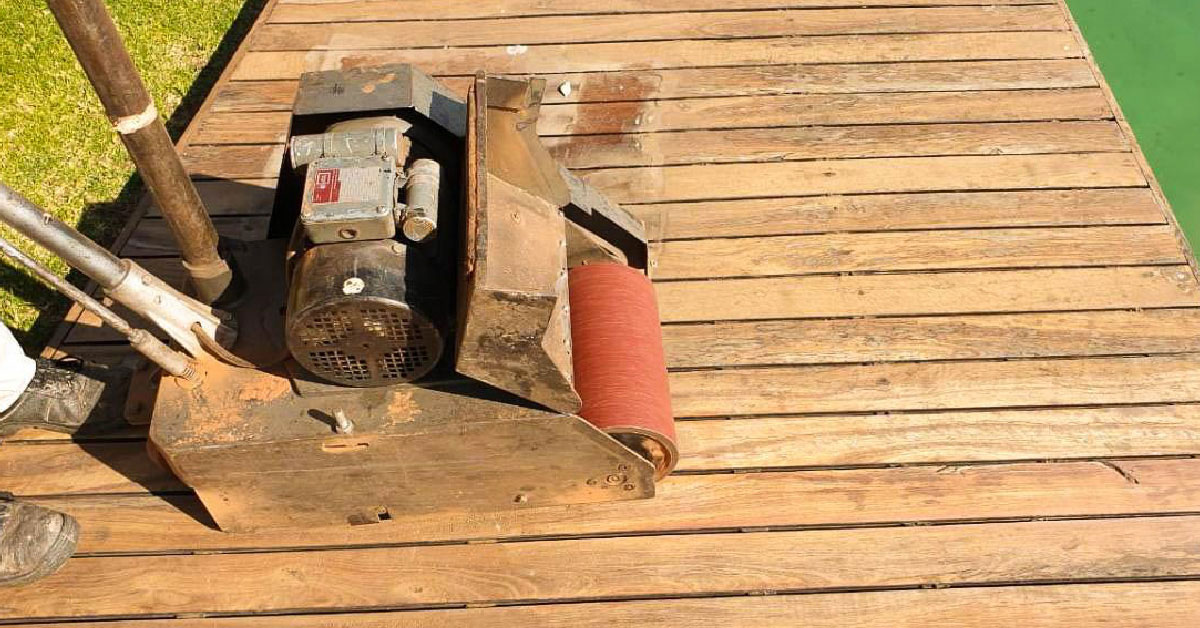
Preparation for a deck reseal or refinish involves several stages. The surface needs to be cleaned thoroughly, removing dirt, mould, and any biological growth that has accumulated in the grain. Previous coating that has failed, lifted, or lost adhesion must be fully removed by sanding or stripping. The timber then needs to dry completely before any product is applied. Moisture trapped beneath a finish is one of the primary causes of early failure, and it is entirely avoidable.
On a deck that has been maintained regularly, preparation is straightforward. On a deck that has been neglected for several seasons, preparation is where most of the work happens.
Choosing the Right Product
Deck finishing products fall into three broad categories: penetrating sealers and oils, semi-transparent stains, and opaque solid stains or exterior finishes. Each has specific applications and limitations, and the right choice depends on the timber, the condition of the deck, and the level of ongoing maintenance you are prepared to commit to.
Penetrating sealers and oils are the most forgiving option for decks in active use. They soak into the timber rather than forming a surface film, which means they do not peel or crack as the wood moves seasonally. For decks where the natural grain is to remain visible, a penetrating sealer or semi-transparent stain is generally the right choice.
Opaque solid stains and exterior finishes form a surface film and provide stronger colour consistency and UV protection. They perform well in high-traffic areas and in fully exposed conditions. The trade-off is that when they eventually fail, the surface needs to be fully stripped before recoating. Applied correctly over properly prepared timber, a quality exterior finish will give good service before requiring attention — but only if the deck is maintained on a proper schedule.
The right product follows a proper assessment of the timber species, the current condition of the deck, its exposure, and the client’s maintenance expectations. There is no single correct answer, which is why product selection should always come after an honest look at what you are actually working with.
Application — What Makes the Difference
Even with the right preparation and the right product, how the finish is applied matters. Penetrating sealers and oils should be applied in moderate temperatures and not in direct summer sun, where the product dries too quickly to penetrate properly. Two thin coats with adequate drying time between them will always outperform a single heavy coat.
For opaque finishes, primer on bare or stripped timber is not optional. A quality exterior primer seals the surface, improves adhesion, and significantly extends the life of the finish coat. Skipping this step to save time is one of the most consistent causes of early failure on exterior timber.
Edge and end grain sections need additional attention. End grain is particularly absorbent and will draw in moisture faster than face grain if it is not adequately sealed. On a deck this means the cut ends of boards at the perimeter and any exposed joint faces where boards meet posts or frames.
Maintenance Scheduling
A deck that is assessed and resealed every year will remain in good structural condition for a very long time. Annual maintenance is not excessive — in Johannesburg’s climate, with the intensity of summer UV and the volume of seasonal rainfall, exterior timber needs regular attention to stay properly protected.
The cost difference between annual maintenance and deferred maintenance is significant. A deck reseal on a well-maintained surface takes a fraction of the time and cost of the same job on timber that has been left without attention, where surface cracks, moisture ingress, and early rot need to be addressed before any sealing can even begin. Keeping to a yearly schedule is always the more economical approach in the long run.
Arranging a Deck Assessment
If your deck is due for sealing or finishing, or if you are not sure what condition it is in or what it needs, an assessment is the right place to start. At Atelier Desjardins we work across decks of all sizes and conditions across Northcliff, Westcliff, Johannesburg, and surrounding suburbs. We are happy to take a look and give you an honest picture of what the work involves.
Contact us to arrange a site assessment.
Stay in the Loop
We send a monthly update with recent projects, woodworking tips, and the occasional look inside the workshop. No spam – just updates worth reading.